
What Is Offset (Industrial Participation)? Obligation Tracking in Defense Tenders
What are offset and the industrial participation obligation? Direct/indirect offset, the SSB process, and commitment-fulfillment tracking in defense tenders with ERP.
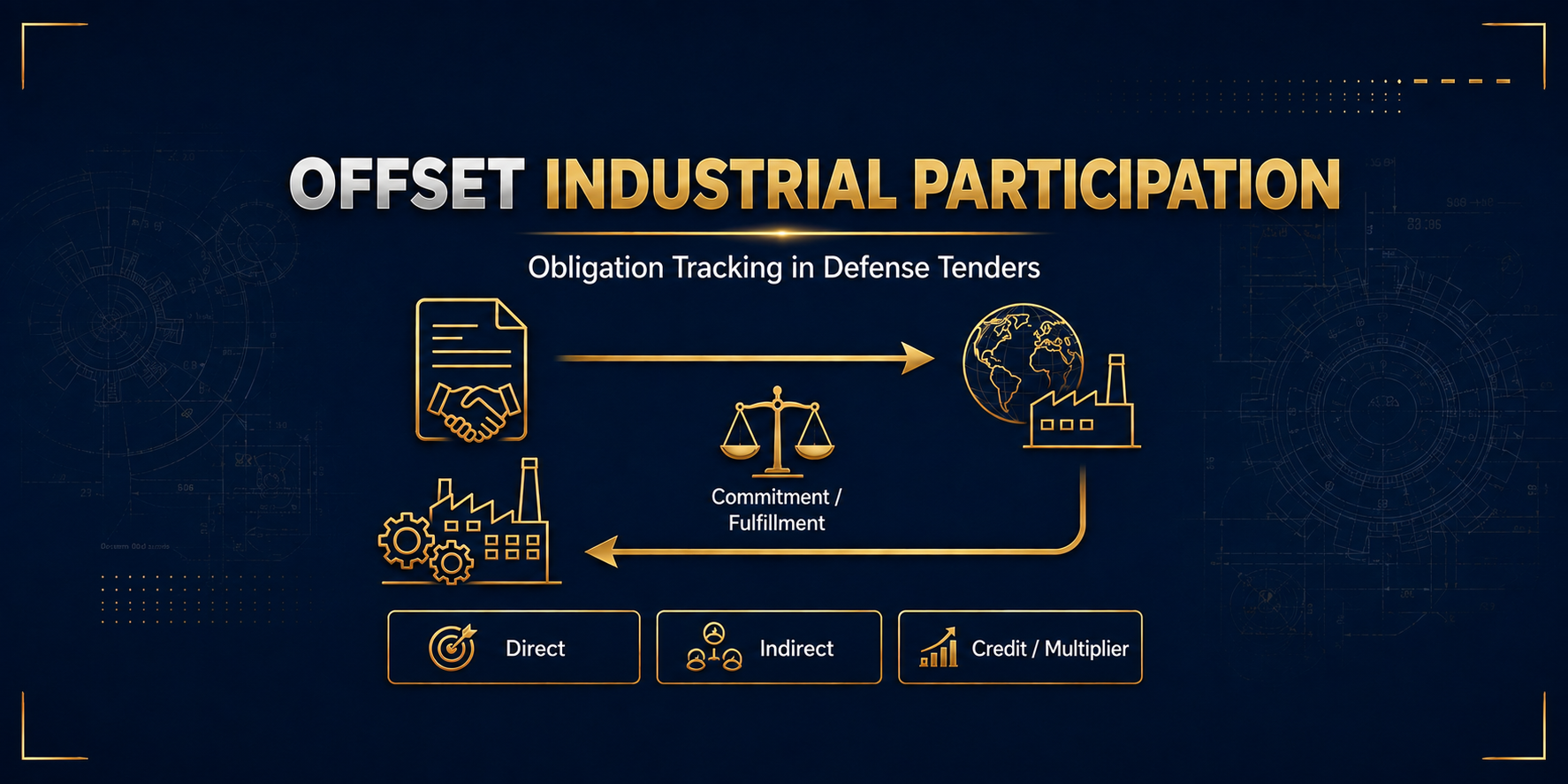
What Is Offset (Industrial Participation)? Obligation Tracking in Defense Tenders
Short answer: Offset (Industrial Participation) is an obligation that ensures part of the amount paid to a foreign contractor in defense procurement returns to the local industry. In Türkiye, this process is run by the Presidency of Defense Industries (SSB) under Industrial Participation/Offset. It is divided into direct (related to the system) and indirect (unrelated to the system) offset; commitments, credits and fulfillments must be tracked and reported meticulously.
When a foreign system is purchased in the defense industry, there is an unseen but critical side of the contract: the contribution the contractor will make to the local industry. That is exactly what offset, or industrial participation, regulates: it ensures that part of the purchase returns to the country through local production, technology transfer or exports. This guide covers what offset is, its types, the role of SSB, and how obligation tracking is managed with an ERP.
What Is Offset (Industrial Participation)?
Offset is the foreign seller’s commitment, in international defense procurement, to contribute to the buyer country’s industry by a certain proportion of the purchase amount. The goal is to reduce dependency, develop local production and technological capability, and create employment. In Türkiye this obligation is called “Industrial Participation/Offset.”
Why Does Offset Exist?
- Developing local industry: Part of the purchase returns to the local supply chain.
- Technology transfer: Bringing critical production and engineering capability to the country.
- Exports and employment: Local firms entering global supply chains.
- Reducing dependency: Strategic independence.
Offset Types: Direct and Indirect
| Type | Description |
|---|---|
| Direct offset | Directly related to the purchased system (local production, sub-contracting, technology transfer) |
| Indirect offset | Unrelated to the system but contributing to defense/civil industry (exports, investment, co-production) |
How Does the Industrial Participation Obligation Work?
- Commitment: The contractor gives an offset commitment at a certain proportion of the contract value.
- Activity plan: Local production, export or investment activities that will meet the commitment are defined.
- Credit and multiplier: Activities carried out count as “offset credit”; some activities are incentivized with a multiplier.
- Fulfillment tracking: Activities spread over years and fulfillment is reported to SSB.
- Closeout / penalty: If the commitment is not met, a contract-based penalty may apply.
Offset and the Role of SSB in Türkiye
In Türkiye the offset process is run within the framework of the Presidency of Defense Industries’ industrial participation regulations. SSB approves commitments, assesses fulfillments and aims to increase local contribution. For local firms, offset is an important gateway into the supply chains of global contractors.
What Are the Challenges in Tracking Offset Obligations?
- Commitments spread over years and many activities
- Managing the credit and multiplier calculation of each activity separately
- Documenting and reporting local contribution and fulfillment
- Associating with multiple sub-contractors and projects
Offset and Obligation Tracking with ERP
An offset obligation is a multi-year tracking task that requires project, procurement and reporting to work together. Running it on spreadsheets leads to missed fulfillments. HarmonyERP brings this tracking together on one platform:
- Project-based tracking of commitments and activities
- Recording local contribution and fulfillment (from procurement and supply data)
- Associating with sub-contractor contracts (supply chain)
- Commitment-vs-fulfillment reporting and early warning
- Integrity with export control in international purchases
Common Mistakes
- Treating the commitment as one-off: Offset is a continuous obligation spread over years.
- Not documenting fulfillment: Evidence is required for it to count as credit.
- Ignoring multipliers: Some activities yield higher credit.
- Delaying reporting: If fulfillment is not reported on time, penalty risk arises.
Frequently Asked Questions (FAQ)
Are offset and industrial participation the same thing? Yes; in Türkiye the offset obligation is called “Industrial Participation/Offset.”
What is the difference between direct and indirect offset? Direct offset relates to the purchased system; indirect offset covers activities unrelated to the system but contributing to the industry.
What is offset credit? The value of the contractor’s completed activities counted toward the commitment; some activities are increased by a multiplier.
What happens if the offset commitment is not met? Depending on the contract, sanctions such as penalties or forfeiture of a guarantee may apply.
How does ERP help with offset tracking? By tracking commitment, activity, local contribution and fulfillment in one system, it automates reporting and early warning.
Conclusion
Offset (industrial participation) is a strategic obligation that ensures defense purchases return as value to the local industry. Tracking these multi-year commitments becomes safe and transparent — in terms of fulfillment and reporting — with the right ERP infrastructure.
Want to manage your procurement, project and obligation tracking with HarmonyERP? Request a free demo or request a quote.
Related Posts
All in Procurement →Transform Your Business with HarmonyERP
Manage manufacturing, accounting, inventory and sales from a single platform. Request a demo and see the difference.