
What is Cumulative Transaction Amount and Why Does It Matter?
Cumulative transaction amount is the running total of all financial transactions in a given period. This guide explains the concept, regulatory significance, analytical techniques and real-world examples across banking, accounting and e-commerce.
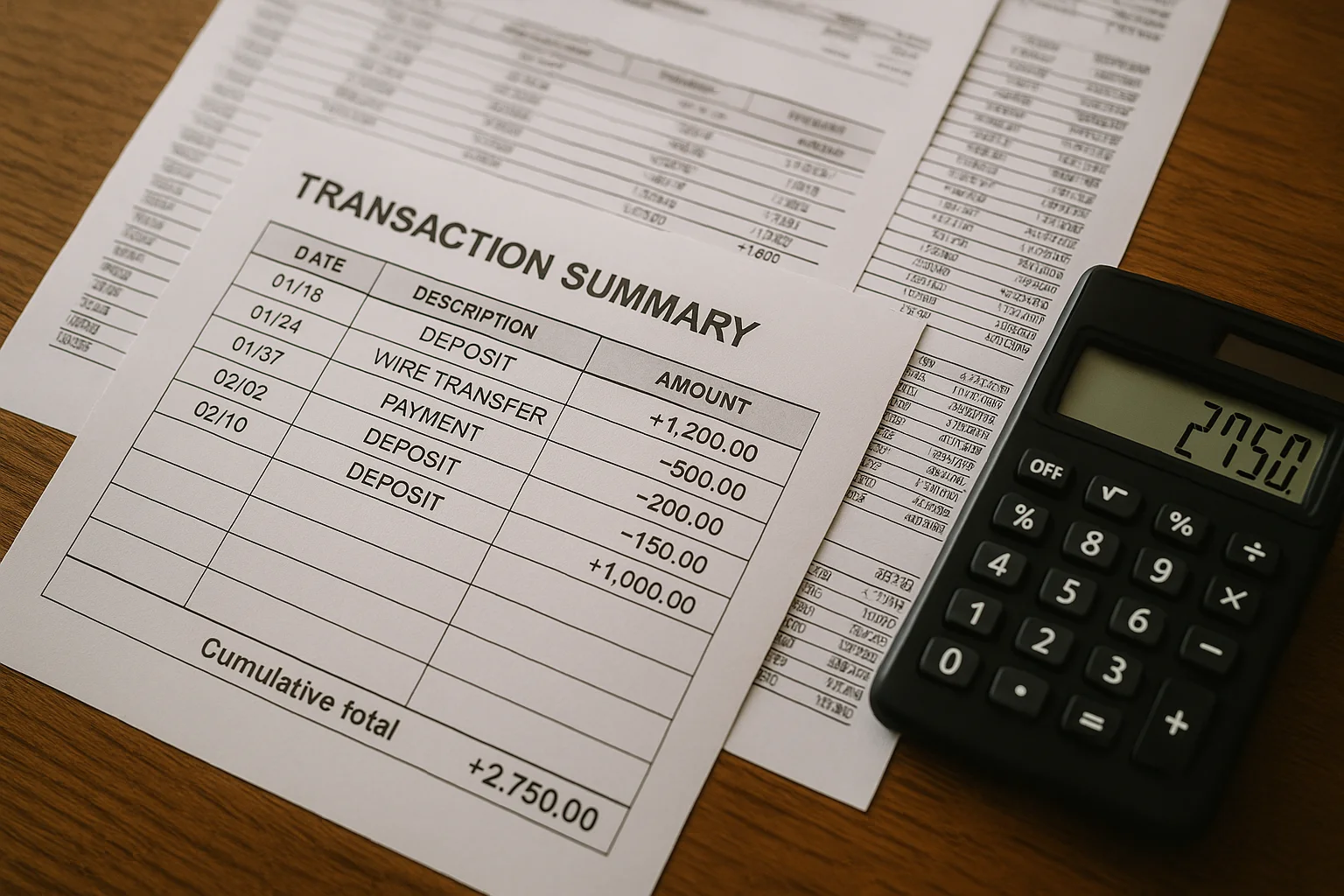
What is a Cumulative Transaction Amount?
A cumulative transaction amount is the running total of every financial transaction within a defined period. “Cumulative” emphasizes accumulation over time — each new transaction is added to the previous total, producing an ever-updating sum. The concept sits at the center of both corporate and personal finance because cash flow, sales performance, payment capacity and even fraud-detection risk can all be read from cumulative totals.
In recent years, tighter financial regulation, the global spread of IFRS reporting standards and the maturation of cloud accounting platforms have made monitoring the cumulative transaction amount more critical than ever.
Core Characteristics
The cumulative transaction amount is not a single line item — it is the sum of many: sales, purchases, payments, receipts, transfers and investment moves. For example, a company’s cumulative sales for a month combine every cash and credit sale into one running total. Personally, your credit-card cumulative spending tells you exactly how much you have committed during the billing cycle.
Cumulative totals are the foundation of many financial analyses:
- Liquidity analysis uses cumulative daily or weekly cash in/out flows.
- Investment performance is measured by cumulative gain or loss across all trades in the period.
- Sales performance uses cumulative revenue against budget for KPI tracking.
- Audit and compliance relies on cumulative totals to test integrity against ledger details.
Before digital transformation, cumulative totals were calculated manually from paper ledgers at period-end. Modern ERP and accounting platforms now update cumulative figures in real time, enabling much faster and more accurate decisions.
Regulatory and Reporting Significance
Banking, AML and Suspicious Transaction Reporting
Banks are required by financial regulators to monitor cumulative daily transaction amounts and flag anomalies. Cumulative cash deposits above a defined threshold trigger automatic review for anti-money-laundering (AML) compliance. Electronic fund transfers (EFT) and international wires are subject to similar rules. Cumulative monitoring lets banks see patterns invisible in single-transaction views.
Tax and Accounting Compliance
Tax authorities use cumulative figures to enforce thresholds: cumulative annual turnover above a defined level triggers mandatory e-invoicing, mandatory VAT registration or different tax regimes. With e-invoicing, e-archive and e-ledger systems, every sale is recorded in near real time, making cumulative totals transparent to regulators.
IFRS and US GAAP
Both IFRS and US GAAP rely on cumulative transaction tracking for proper revenue recognition. Under IFRS 15, when and how to recognize revenue depends on cumulative performance against multi-period contracts. Cumulative tracking is therefore a foundation of compliant financial reporting.
Modern Audit Techniques
Audit firms now use data analytics and AI on cumulative transaction datasets to detect anomalies. A cumulative figure jumping 20% in a month when historical norms are 5% triggers further investigation — was that real sales growth or potential manipulation? Cumulative-amount anomaly detection is a frontline fraud control.
Analytical Techniques
Simple Summation
The most basic approach is direct addition: =SUM(A2:A31) in a spreadsheet, or SELECT SUM(amount) in SQL. For small businesses, this is sufficient.
Time-Series Analysis
Mid-to-large businesses analyze the cumulative amount as a time series — daily, weekly, monthly, quarterly. Day-of-week patterns, seasonality and event-driven spikes become visible.
Forecasting Models
Machine learning models trained on historical daily cumulative sales can forecast next-month cumulative revenue with 80–90% accuracy. Forecast-driven businesses use this for cash-flow management and inventory planning.
Comparative Reporting
The most common executive view: cumulative this-period vs. cumulative prior-period (month-over-month, quarter-over-quarter, year-over-year). A 20% YoY cumulative sales growth in a 25%-growth sector signals competitive lag, even if absolute numbers look strong.
Real-World Scenarios
E-Commerce Peak Seasons
During Black Friday, Cyber Monday or major regional sales events, daily cumulative transaction volume can be many times normal. Cash-flow looks strong, but downstream effects — returns, late payments, fraud spikes — distort the picture. Real-time cumulative monitoring catches anomalies during, not after, the peak.
Banking Threshold Monitoring
When a customer’s cumulative daily cash deposit exceeds a defined threshold, automatic review is triggered. If the activity does not match the customer’s commercial profile, a suspicious-transaction report may be filed. Cumulative tracking makes this both faster and more defensible than transaction-by-transaction inspection.
Personal Credit Card Spending
Individuals routinely overspend because they monitor single transactions, not cumulative monthly spend. Mobile banking apps that push real-time cumulative alerts help users stay within their limit and avoid interest charges.
M&A Due Diligence
In acquisitions, due-diligence teams scrutinize the target’s cumulative revenue, cumulative receipts and cumulative receivables over the prior 24 months. Anomalous spikes or dips trigger deeper investigation into revenue quality and collection risk.
Frequently Asked Questions
Is cumulative transaction amount the same as total revenue?
Not exactly. Total revenue is one specific cumulative — cumulative sales. Cumulative transaction amount is a broader concept covering any class of transactions: sales, purchases, transfers, expenses, deposits and so on.
How often should cumulative totals be reviewed?
Operationally daily or weekly for cash and sales; monthly for management reporting; quarterly for board reporting; annually for audited financial statements.
What is the difference between cumulative and average?
Cumulative is the sum; average is the sum divided by count. Both are useful but answer different questions. Cumulative shows total volume; average shows per-transaction intensity.
Can cumulative tracking detect fraud?
Yes. Cumulative anomaly detection is one of the most effective fraud-detection techniques because individual fraudulent transactions are often calibrated to fly under per-transaction thresholds — but their cumulative effect stands out.
What tools provide real-time cumulative tracking?
Modern ERP and accounting platforms (cloud ERP in particular) update cumulative balances in real time. BI tools like Power BI or Tableau layer reporting on top.
Conclusion
The cumulative transaction amount is one of the simplest financial concepts and one of the most underused. Properly monitored, it powers liquidity management, regulatory compliance, fraud detection and strategic decision-making. The businesses that benefit most are those that move cumulative tracking from a month-end accounting chore to a real-time operational signal — and the tools to do this are now mainstream, affordable and embedded in modern ERP and accounting platforms.
Related Posts
All in Accounting & Finance →Project-Based Cost Accounting: Budget vs. Actual Tracking in Defense Projects
Accounting & FinanceWhat Is a Balance Sheet? Understanding the Financial Snapshot of Your Business
Accounting & FinanceHow to Write a Check Correctly: A Step-by-Step Guide for Businesses
Accounting & FinanceWhat Is a Letter of Guarantee? A Key Tool in Corporate Risk Management
Transform Your Business with HarmonyERP
Manage manufacturing, accounting, inventory and sales from a single platform. Request a demo and see the difference.