
What is Industry 4.0?
Industry 4.0 is the integration of digital technologies, automation and connected data into manufacturing and industrial processes. This guide covers core technologies, business benefits, implementation challenges and the future of smart factories.
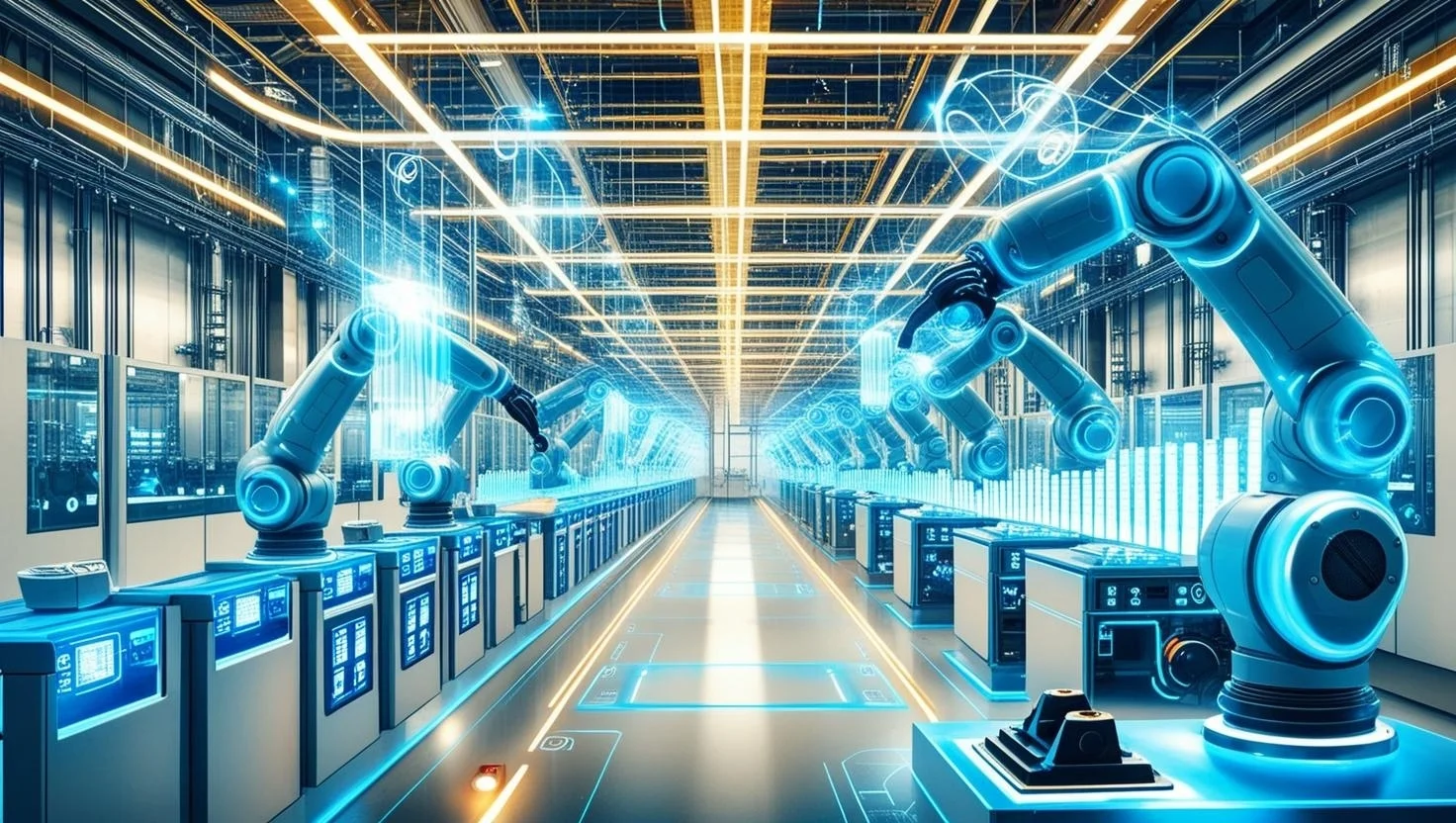
What is Industry 4.0?
Industry 4.0 refers to the fourth industrial revolution — the integration of digital technologies, automation, and connected data systems into manufacturing and industrial processes. At its core, Industry 4.0 enables the creation of smart factories where physical machinery, software systems, and human operators work together through real-time data exchange. This transformation aims to make production more efficient, flexible and sustainable, while reducing costs and giving manufacturers a competitive edge in global markets.
Unlike the earlier industrial revolutions — mechanization (1.0), mass production (2.0), and computerization (3.0) — Industry 4.0 is defined by the convergence of cyber-physical systems, the Internet of Things (IoT), artificial intelligence (AI), and big data analytics. These technologies allow machines and systems to communicate, learn and adapt with minimal human intervention.
Core Technologies of Industry 4.0
Internet of Things (IoT)
IoT enables machines, sensors and equipment to be interconnected through the internet, exchanging real-time data. In a smart factory, IoT sensors continuously monitor temperature, vibration, energy consumption and production output. This visibility transforms reactive maintenance into predictive maintenance and replaces guesswork with data.
Artificial Intelligence and Machine Learning
AI and ML algorithms analyze the massive datasets generated by connected factories. Common applications include demand forecasting, predictive maintenance, quality inspection through computer vision, and dynamic production scheduling that adjusts every few minutes as conditions change.
Big Data and Analytics
Smart factories produce terabytes of process data every day. Big data platforms aggregate this information and analytics tools turn it into actionable insight: which machine is the bottleneck, which operator achieves the highest first-pass yield, which raw-material lot correlates with quality issues.
Cyber-Physical Systems
Cyber-physical systems combine physical machinery with embedded sensors, software and network connectivity. This integration enables real-time monitoring and control of production processes, and is the foundation of Manufacturing Execution Systems (MES).
Cloud Computing and Edge Computing
Cloud ERP and cloud-based MES platforms make Industry 4.0 affordable for mid-sized manufacturers. Edge computing complements the cloud by processing time-sensitive data on the machine itself, keeping latency low for control loops.
Additive Manufacturing (3D Printing)
3D printing is a key Industry 4.0 enabler for rapid prototyping, low-volume production of complex parts, and on-demand spare parts. It compresses lead times and reduces inventory holding costs.
Business Benefits of Industry 4.0
- Productivity: real-time monitoring and AI-driven scheduling typically deliver 10–20% throughput gains.
- Quality: automated inspection and traceability reduce defect rates by 20–40% on connected lines.
- Flexibility: smart factories can switch product variants in minutes rather than days.
- Cost reduction: predictive maintenance alone can cut unplanned downtime by 30–50%.
- Sustainability: energy and material consumption are continuously optimized.
Implementation Challenges
Despite the benefits, Industry 4.0 projects fail more often than they succeed. The most common pitfalls:
- Data quality: AI is only as good as the data it learns from. Plants with poor master data produce useless models.
- Cybersecurity: more connected devices means a larger attack surface; OT security is now as important as IT security.
- Skills gap: operators, technicians and engineers need new digital skills the legacy workforce may not have.
- Integration complexity: legacy machines without modern interfaces require expensive retrofits to participate in the data stream.
- ROI patience: Industry 4.0 ROI compounds over 2–3 years; one-quarter horizons set projects up for cancellation.
The Future of Industry 4.0
The next decade will deepen Industry 4.0 with several trends:
- Industry 5.0: explicit focus on human-machine collaboration and sustainability, balancing the technology-first focus of 4.0.
- Digital twins: virtual replicas of physical assets enable simulation of layout, capacity and product changes before they happen on the real floor.
- Autonomous logistics: AGVs, AMRs and drone-based inventory counting eliminate manual handling.
- Generative AI: moving from descriptive analytics (“what happened”) to generative design and prescriptive recommendations (“what should we change”).
Frequently Asked Questions
Is Industry 4.0 only for large manufacturers?
No. While Industry 4.0 started in large automotive and electronics plants, cloud-based MES and ERP platforms have made the core technologies affordable for small and mid-sized manufacturers. Many SMEs start with a single connected line and expand from there.
How long does an Industry 4.0 transformation take?
A focused pilot on one line takes 6–12 months. A full plant transformation typically runs 24–36 months. The key driver of speed is data foundation quality and executive commitment to long-term ROI.
Does Industry 4.0 replace human workers?
It changes the work, not the workforce. Repetitive monitoring tasks are automated, but skilled work in setup, exception handling, continuous improvement and data interpretation grows. Successful Industry 4.0 plants invest heavily in upskilling.
What is the difference between Industry 4.0 and digital transformation?
Digital transformation is the broader business-wide shift to digital processes across sales, finance, HR and operations. Industry 4.0 is the manufacturing-specific subset focused on production technology and the connected factory.
What role does ERP play in Industry 4.0?
ERP is the business backbone that gives Industry 4.0 technologies meaningful context. Without ERP, IoT and AI generate data but cannot tie it to orders, costs or customer commitments. The most successful Industry 4.0 deployments sit on a solid ERP foundation.
Conclusion
Industry 4.0 is no longer a future vision — it is the operating standard for competitive manufacturers worldwide. The technologies are mature, the business case is proven, and the cost of adoption has dropped dramatically. The remaining barriers are organizational, not technical: data discipline, change management and a willingness to measure ROI over years rather than quarters. Manufacturers that commit to the journey will compete on lead time and cost; those that wait will increasingly find themselves outpaced.
Related Posts
All in Digital Transformation & Technology →Transform Your Business with HarmonyERP
Manage manufacturing, accounting, inventory and sales from a single platform. Request a demo and see the difference.